The Historic Moorish and Roman Heritage of the Algarve
For many travelers, the Algarve is synonymous with golden sands and turquoise waters. However, for those with a passion for history and patrimoine, the region offers a far deeper narrative. Long before the first sunseekers arrived, the Algarve - then known as Al-Gharb - was a prestigious crossroads of civilizations.
From the monumental engineering of the Roman Empire to the intricate architectural soul of the Moorish occupation, Eastern Algarve (Sotavento) is a living museum. Here, history is not only found in textbooks; it is carved into the ancient walls of Faro, reflected in the arches of Tavira’s legendary bridge, and buried in the silent mosaics of Roman villas.
For culturally curious travelers, especially those from France and Northern Europe who value historical depth, exploring Eastern Algarve is an immersive journey through five centuries of Islamic rule and the enduring legacy of Rome.
Why the Eastern Algarve Feels Different From the Rest of Portugal
Unlike many coastal regions transformed by mass tourism, the Eastern Algarve still preserves visible layers of its ancient civilizations.
Roman foundations coexist here with Moorish urban design, Gothic churches and traditional Portuguese architecture. Walking through Faro or Tavira often feels less like visiting a beach destination and more like discovering an overlooked Mediterranean heritage route.
This cultural depth is one of the reasons why travelers from France increasingly choose the Eastern Algarve over more commercial destinations in Southern Europe.
Faro: The Walled Heart of Al-Gharb
Faro, or Ossonoba as it was known to the Romans, has always been the strategic soul of the region. The Cidade Velha is a breathtaking architectural palimpsest where layers of history are stacked upon each other.
The most iconic symbol is the Arco da Vila. While its exterior is a stunning example of 19th-century Italianate architecture, it actually houses an original Moorish gate - one of the best-preserved examples in Portugal. Walking through these gates, you enter a labyrinth of cobblestone streets that once formed the heart of the Islamic administration. The name of the surrounding district, Mouraria, still echoes the presence of the Moorish community that remained here after the Christian reconquest in 1249.
Even Faro Cathedral (Sé) tells a story of transformation, built on the very site where a Roman temple and later a Moorish mosque once stood. For the history enthusiast, every corner of Faro reveals a hidden layer of the Mediterranean's shared past.
The Moorish Soul of Faro’s Historic Center
Very few visitors realize that Faro’s historical center still follows the urban logic of an Islamic medina. Narrow streets were intentionally designed to create shade and freshness during the intense southern summers.
Even today, walking through the Mouraria district reveals a quieter and more intimate Algarve - one built around patios, hidden courtyards and whitewashed walls inspired by North African architecture. For culturally curious travelers, staying inside Faro’s historic center becomes part of the historical experience itself.
Tavira: The Roman Legacy and the Scissor Roofs
Often cited as the most architecturally beautiful town in the Algarve, Tavira is a masterpiece of historical fusion. Its most famous landmark, the Ponte Romana over the Gilão River, connects the two halves of the town. While its current appearance dates largely from the 17th century, the seven arches stand on original Roman foundations, serving as a reminder of Tavira’s importance on the ancient Roman road between Balsa and Ossonoba.
High above the town, the ruins of the Moorish Castle offer a panoramic view of the traditional tesoura, or scissor, roofs, a distinctive architectural feature of Tavira. Inside the castle garden, you can still see the remains of the Islamic-era walls. The nearby Santa Maria do Castelo church was built over the town’s Great Mosque, and a small museum nearby displays fascinating artifacts from the Islamic period, including the famous Vase of Tavira.
Tavira - The Most Elegant Historic Town in the Algarve
For many cultural travelers, Tavira represents the refined face of the Algarve. Unlike resort-oriented towns, Tavira preserved much of its architectural harmony. Churches, tiled facades, hidden courtyards and the elegant rhythm of the Gilão River create an atmosphere often described as timeless.
French travelers especially appreciate Tavira because it combines:
Mediterranean light
historical depth
gastronomy
walkability
artistic atmosphere
slow lifestyle
The town feels sophisticated without becoming artificial.
Milreu: A Glimpse into Roman Luxury
Just a short trip from Faro, near the village of Estói, lies the Roman Villa of Milreu. This is one of the most important archaeological sites in the Iberian Peninsula. It was not just a farm; it was a luxurious rural palace belonging to a wealthy Roman family.
Visitors can walk through the remains of a sophisticated thermal spa complex and admire incredibly well-preserved mosaics featuring maritime themes, including dolphins and fish that still retain their vibrant colors. The site also features a rare Roman temple that was later converted into a Christian church, showcasing the long and complex religious history of the region. For French travelers who appreciate the art de vivre, Milreu offers a fascinating look at how the Roman elite enjoyed the Algarve sun nearly 2,000 years ago.
The Roman Roads That Connected the Algarve
During the Roman Empire, the Algarve was not an isolated coastline but an important commercial corridor connecting the Iberian Peninsula to the wider Mediterranean world. Ancient Roman roads linked Ossonoba (Faro), Balsa (near Tavira) and Baesuris (Castro Marim), allowing the transport of olive oil, fish products and ceramics across the empire.
Many modern Algarve towns still follow these ancient geographical routes, meaning that today’s travelers unknowingly move through landscapes shaped over two millennia ago.
Ossonoba to Faro
Balsa near Tavira
Baesuris near Castro Marim
The Influence of Islamic Architecture in the Algarve
Many of the architectural elements travelers associate with the Algarve actually originate from the Islamic period. This legacy gives Eastern Algarve a unique visual identity that differs from other coastal destinations in Portugal.
whitewashed facades
interior patios
geometric chimney designs
narrow shaded streets
rooftop terraces
decorative tiles
This legacy gives Eastern Algarve a unique visual identity that differs from other coastal destinations in Portugal.
A Perfect Cultural Itinerary Between Faro and Tavira
One of the greatest advantages of Eastern Algarve is how easily travelers can combine multiple historical destinations in a single trip. Suggested cultural route:
Day 1: Explore Faro Old Town, Arco da Vila and the Municipal Museum.
Day 2: Visit Estói and the Roman ruins of Milreu.
Day 3: Take the regional train to Tavira and explore the Roman bridge, castle gardens and churches.
Day 4: Enjoy Santa Luzia’s peaceful atmosphere and discover the relationship between fishing culture and Algarve identity.
Frequently Asked Questions (FAQ)
Why was the Moorish period so important for the Algarve?
The Moorish occupation, from the 8th to the 13th centuries, fundamentally shaped the Algarve. It introduced advanced irrigation systems, new crops such as almonds and citrus, and the distinctive whitewashed, flat-roofed architecture that still defines the region today. The very name Algarve comes from the Arabic Al-Gharb, meaning The West.
Can I see Roman ruins in Faro?
Yes. Besides the artifacts in the Municipal Museum, the city’s ancient walls contain Roman stones, and the foundations of many buildings in the Old Town date back to the Roman period, when Faro was the major port city of Ossonoba.
Is it easy to visit these sites without a car?
Absolutely. Faro and Tavira are easily accessible by regional train. The Roman Villa of Milreu is a quick taxi or Uber ride from Faro city center.
What does Al-Gharb mean?
Al-Gharb means The West in Arabic and was the historical name of the Algarve.
Why do many Algarve towns have white houses?
The whitewashed architecture comes largely from Moorish influence and helps reflect sunlight during hot summers.
Is Faro worth visiting for history lovers?
Absolutely. Faro is one of the most historically rich cities in Southern Portugal.
Recommended Stays for a Cultural Heritage Trip
If you want to breathe in the history of the Algarve, your choice of accommodation should be part of the story.
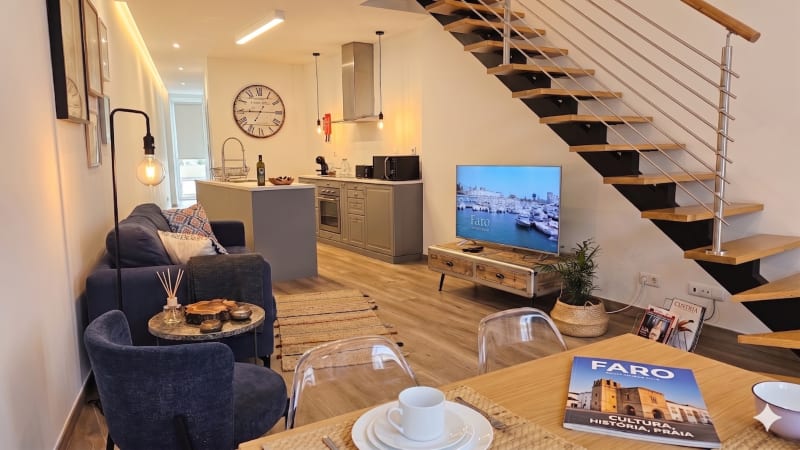
Stay at Casa da Mouraria, located in the very heart of Faro's historic center. The apartment is situated in the ancient Moorish quarter, offering you the unique experience of living within the walled history of the capital. With its private patio and capacity for up to 4 guests, it is the ultimate base for a cultural and historical escape.
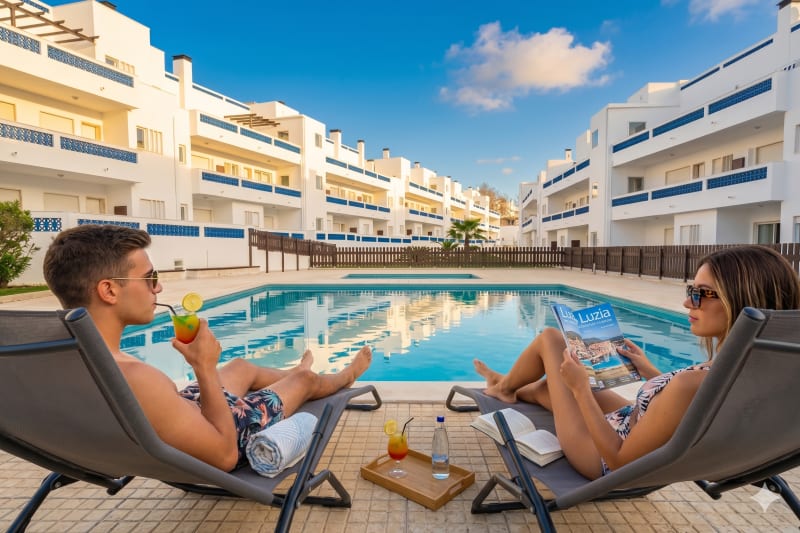
For those drawn to the Roman elegance and riverside charm of Tavira, our Santos Apartment in Santa Luzia offers a modern sanctuary just minutes away from the Roman bridge and the historical treasures of the region.
Book your journey through time directly with Algarve Stay Homes.
Where to stay
Our Algarve Homes
Stay close to everything you explored in this guide.