Birdwatching in the Ria Formosa: A Nature Lover's Paradise (2026)
While the Algarve is globally celebrated for its golden beaches and dramatic cliffs, a quiet paradise lies waiting for those who look closely at its protected coastal wetlands. For nature lovers and eco-tourists from Northern Europe, the Eastern Algarve (Sotavento) is not just a holiday destination; it is one of the most important and vibrant bird sanctuaries in Europe.
At the heart of this avian wonderland is the Ria Formosa Natural Park. Stretching for 60 kilometers along the leeward coast, this labyrinth of barrier islands, salt marshes, tidal flats, and pine woodlands serves as a crucial crossroads for bird migration between Europe and Africa. Over 20,000 aquatic birds winter here, making it a spectacular year-round destination for wildlife photography and peaceful observation.
If you are looking to trade the noise of modern life for the gentle calls of wading birds and the slow rhythm of the tides, this 2026 local guide will introduce you to the unparalleled birdwatching experiences of the Eastern Algarve.
🌦️ The Weather & Migration Rhythm
The Eastern Algarve operates on a magnificent natural timetable. While summer brings clear blue skies ideal for coastal exploration, the landscape truly awakens during the migration and winter shoulder seasons:
The Autumn & Spring Surge (September–November & March–May): The air is filled with movement as thousands of birds use the lagoon as a vital highway. Temperatures are wonderfully mild, averaging 68°F (20°C), perfect for hours spent on the trails.
The Gentle Winter (December–February): A favorite for Northern Europeans. The crisp, clean winter light provides extraordinary visibility, and the low-slung sun warms the salt pans, creating a perfect refuge for over-wintering species.
Why the Ria Formosa is One of Europe’s Best Kept Nature Secrets
For many travelers visiting Portugal for the first time, the Algarve is associated almost exclusively with beaches and summer holidays. Very few realize that the Eastern Algarve hides one of the richest wetland ecosystems in Southern Europe.
The Ria Formosa is internationally protected and recognized as a RAMSAR wetland of global ecological importance. Because of its strategic location between Europe and Africa, thousands of migratory birds use these lagoons as a resting and feeding point during their long seasonal journeys.
What makes this region especially unique is the combination of accessibility and tranquility. Unlike other famous European birdwatching destinations that require remote expeditions or difficult hikes, here you can observe flamingos, spoonbills and rare species just minutes from historic towns like Faro, Tavira and Santa Luzia.
For slow travelers, photographers and eco-tourists, the Ria Formosa offers something increasingly rare in modern Europe: silence, open landscapes and an authentic connection with nature.
"Back home, my days are governed by train timetables and screens. Standing on the edge of the Ludo trail at 8:00 AM, with nothing but the soft whistling of the wind through the reeds and the pale pink brushstrokes of flamingos against the water, I felt an incredible sense of clarity. The Eastern Algarve reminds you that nature doesn't rush, yet everything gets accomplished."
— Willem v. D., Amsterdam
💡 Premium Eco-Travel Tip
Leave No Trace: The Ria Formosa is a highly sensitive landscape. When walking or cycling the trails, always stay on the designated wooden boardwalks or dirt paths to protect the delicate nesting grounds of ground-breeding waders and the fragile salt-marsh flora.
The Ria Formosa: A Global Wetland of Importance
The Ria Formosa is a dynamic, ever-changing ecosystem. Because it is protected from the strong Atlantic currents by a chain of barrier islands, the shallow, nutrient-rich waters inside the lagoon create an endless buffet for marine and bird life.
The landscape is incredibly varied. Within a short walk or cycle, you can transition from fresh-water lagoons and dense reed beds to traditional, geometric salt pans (salinas) that reflect the blue sky like mirrors. This diversity of habitats means an extraordinary diversity of species. For the slow traveler, there is nothing quite as restorative as spending a quiet morning on the wooden boardwalks, completely immersed in this thriving ecosystem.
Another reason birdwatchers fall in love with the Eastern Algarve is the quality of light throughout the year. Early mornings often bring soft mist rising above the lagoons, while late afternoons create golden reflections across the salt pans and tidal channels.
For wildlife photographers, these atmospheric conditions are extraordinary. During winter and migration seasons, the landscape constantly changes with the tides, meaning no two visits ever feel exactly the same.
The entire region encourages a slower rhythm of travel. Instead of rushing between attractions, visitors naturally begin to adapt to the pace of the tides, sunrise walks and peaceful observation.
📸 Photography Moment: The Pale Pastel Palette
To capture the true essence of the wetlands, set your camera to expose for the soft highlights right after the sun dips below the horizon. The tidal mudflats turn into a canvas of metallic blues, deep purples, and mirrored grays, making the silhouettes of wading birds look like fine-art ink drawings.
What to Spot: Flamingos, Spoonbills, and Rare Species
Whether you are a seasoned ornithologist equipped with a spotting scope or a casual nature lover with a smartphone, the wildlife here never disappoints:
Greater Flamingos: The absolute stars of the salt pans. You can easily spot massive flocks of these elegant, pink-hued birds wading in the shallow waters near Faro, Olhão, and Tavira throughout the entire year.
Eurasian Spoonbills: With their distinctive, spatula-shaped bills, these fascinating white birds are a favorite among photographers as they sweep their heads through the water to catch small fish.
White Storks: A true symbol of the Algarve. Look up in historic towns like Faro, and you will see their massive, gravity-defying nests perched on top of church bell towers and ancient arches.
Purple Swamphens: The symbol of the Ria Formosa Natural Park. This rare, striking blue-and-purple bird with a bright red beak is notoriously shy but can often be spotted hiding in the dense reed beds.
Migratory Birds: During the autumn and spring migrations, the skies fill with Booted Eagles, Ospreys, and thousands of waders traveling between continents.
Flamingos in the Algarve: When and Where to See Them
One of the most searched nature experiences in Portugal is seeing flamingos in the wild — and the Eastern Algarve is one of the easiest places in Europe to do it.
Unlike safari-style wildlife destinations, here the experience feels incredibly intimate and accessible. Flamingos can often be observed feeding quietly just a few meters from walking paths and cycling trails.
The best areas to spot them include the salt pans near Faro Airport, the Ludo Trail, the wetlands around Olhão, and the salinas between Santa Luzia and Tavira.
Winter is especially spectacular because large migratory populations settle in the region thanks to the Algarve’s mild climate and abundant food sources. For many Northern European visitors escaping colder climates, watching flamingos under warm winter sunlight becomes one of the most memorable moments of their trip.
👉 Local Tip
Local tip: Early morning around sunrise offers the calmest conditions and the best reflections for photography. Birds are usually more active before the midday heat.
Best Birdwatching Hotspots in the Eastern Algarve
The beauty of birdwatching in the Eastern Algarve is its accessibility. You do not need to embark on grueling hikes; the best spots are incredibly close to the historic towns.
The Faro and Ludo Trails: Just a few kilometers from the Faro city center lies the Ludo and Quinta do Lago trail system. This flat, well-maintained network of dirt tracks runs between fresh-water lakes, pine forests, and tidal flats. It is widely considered one of the best areas to spot the elusive Purple Swamphen and large gatherings of ducks and herons.
The Salt Pans of Santa Luzia and Tavira: For maximum convenience, the salinas (salt pans) located right between the fishing village of Santa Luzia and the city of Tavira are spectacular. You can simply walk or ride a bicycle out of your accommodation, and within five minutes, you will find yourself surrounded by Black-winged Stilts, Avocets, and Flamingos feeding just meters away from the path.
🏛️ Authenticity Signals: The Legacy of Salt-Making
The geometric salt pans are not just ecological feeding grounds; they represent centuries of human heritage. Traditional Roman salt production techniques are still alive here. The high salinity that draws the microscopic brine shrimp—the flamingo's favorite meal—is the exact same reason why the Eastern Algarve produces some of the world's finest, mineral-rich Flor de Sal.
Birdwatching Without a Car in the Algarve
One of the biggest advantages of the Eastern Algarve is that many of the best birdwatching areas can be explored without renting a car. This is particularly attractive for European travelers looking for sustainable and stress-free holidays.
Faro, Tavira and Santa Luzia are connected by regional train, and many nature trails begin directly from urban areas or nearby cycle routes. This means visitors can stay several nights in one location, explore slowly without changing hotels, reduce travel stress, and experience the region in a more eco-friendly way.
For guests staying 3 to 5 nights, the region naturally encourages a slower style of travel centered around walking, cycling and observing nature rather than rushing between attractions.
A Different Algarve: Silence, Nature and Slow Travel
For many travelers, the greatest luxury today is not crowds or nightlife — it is silence.
The Eastern Algarve offers a completely different experience from the highly commercialized resort areas found elsewhere along the coast. Here, mornings begin with birdsong instead of traffic, and evenings are spent watching sunsets over calm lagoons instead of crowded bars.
This is why the region has become increasingly popular among nature photographers, retired travelers from Northern Europe, digital detox travelers, couples seeking peaceful escapes, and eco-conscious tourists. Many guests initially arrive for the beaches, but end up remembering the quiet landscapes of the Ria Formosa as the true highlight of their trip.
"We sat on a small bench on the edge of the Santa Luzia salt pans as the evening set in. The sky turned a soft violet. All we could hear was the distant, melodic honking of a flock of flamingos returning to their roosts. No music, no car horns. Just the breathing of the marsh. It felt like finding a piece of the old, unedited Europe."
— Clara & Dieter K., Munich
Frequently Asked Questions (FAQ)
When is the best time of year for birdwatching in the Algarve?
While summer offers great weather, the absolute best seasons for birdwatching are Autumn (September-November) and Spring (March-May) to catch the incredible migrations. Winter is also exceptional, as thousands of aquatic birds from Northern Europe choose the mild Algarve to spend the colder months.
Do I need a professional guide?
While hiring a local nature guide can deeply enhance your experience (they know exactly where the rarest species hide), it is not strictly necessary. The trails around Faro, Santa Luzia, and Tavira are very flat, clearly marked, and highly accessible for independent exploration.
Are the trails suitable for cycling?
Yes! The Ecovia do Litoral runs directly through the best birdwatching territories. Renting a bicycle allows you to cover more ground quietly, making it the perfect eco-friendly transport for wildlife spotting.
How many nights should I stay for birdwatching in the Algarve?
A minimum of 3 nights is highly recommended to properly explore different areas of the Ria Formosa without rushing. Many nature travelers choose to stay 5 nights or longer.
Can I combine birdwatching with beach holidays?
Absolutely. One of the unique aspects of the Eastern Algarve is the ability to combine pristine beaches, authentic villages and world-class birdwatching within the same trip.
Is the Ria Formosa good for photography beginners?
Yes. The easy access, flat trails and incredible natural light make the region perfect even for amateur wildlife photographers.
Suggested 3 to 5 Day Nature Escape in the Eastern Algarve
This slower itinerary allows travelers to truly disconnect and experience the natural rhythm of the Algarve:
Day 1:
Arrival in Faro, check-in, and a peaceful sunset walk through the nearby Ria Formosa boardwalks to unwind after the flight.
Day 2:
Morning birdwatching at the magnificent Ludo Trail, followed by a slow lunch in the cobblestone streets of Faro Old Town.
Day 3:
Transfer to your seaside base in Santa Luzia; spend the afternoon exploring the salt pans and the Ecovia cycling paths on two wheels.
Optional Days 4 & 5:
Rent a bike to visit Tavira, cycle down to Praia do Barril, and dedicate the dawn and twilight golden hours to dedicated wildlife photography and lagoon relaxation.
Recommended Stays for Nature Lovers
To truly connect with nature, you need an accommodation that puts the great outdoors right at your doorstep. Our properties at Algarve Stay Homes offer the ultimate sanctuary for eco-conscious travelers:
Santos Apartment (Santa Luzia)
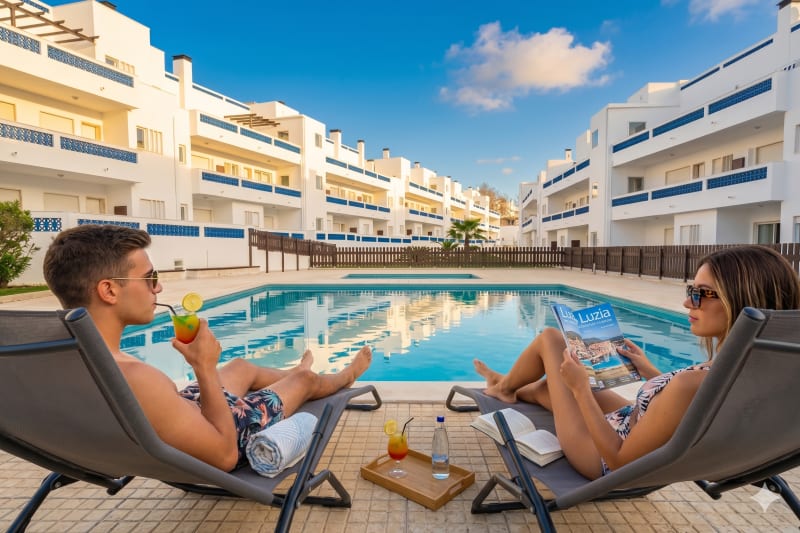
Our Santos Apartment in Santa Luzia is a nature lover's dream. Located just minutes from the vibrant salt pans and the Ecovia nature trails, you can wake up, grab your binoculars, and be surrounded by flamingos in less time than it takes to drink an espresso. After a long day of walking the trails, return to the comfort of your modern apartment, park in your private garage, and relax by the community pool.
Casa da Mouraria (Faro)
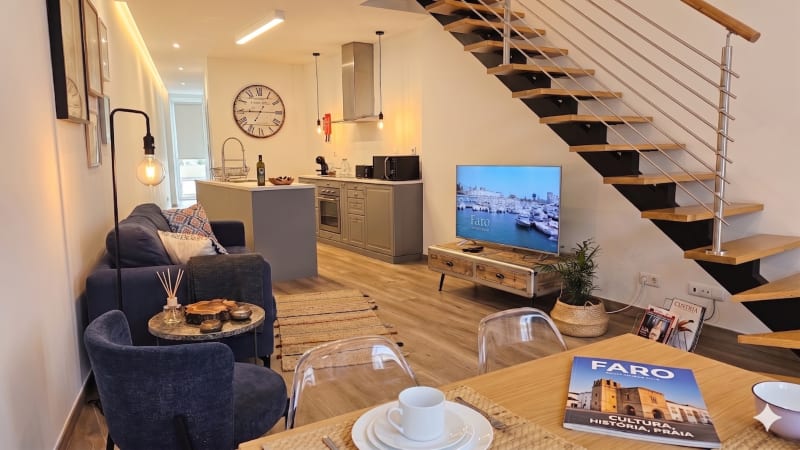
If you prefer to base yourself closer to the sprawling Ludo trails while enjoying the rich heritage of the capital, our Casa da Mouraria offers a serene, private sanctuary right in the historic center of Faro. Featuring a gorgeous private courtyard, it is the perfect spot to review your photography work in complete peace.
Embrace the wild, elegant beauty of the wetlands. Book your eco-friendly stay with us today.
Where to stay
Our Algarve Homes
Stay close to everything you explored in this guide.