Where to Stay in Algarve Without a Car (2026 Guide)
There is a long-standing myth in travel communities that renting a car is absolutely essential to enjoy a holiday in the Algarve. While a vehicle might be necessary to navigate the steep cliffs and isolated coves of the Western Algarve, in 2026, it is entirely possible and often much more relaxing to experience the region completely car-free.
The secret lies in choosing the Eastern Algarve (the Sotavento Algarvio).
Thanks to the immediate proximity of Faro International Airport, a reliable and highly scenic regional railway network, and extensive ferry boat connections to the barrier islands, the Eastern Algarve is a paradise for sustainable, stress-free travel. For eco-conscious travelers, digital nomads, and visitors from Germany, the Netherlands, France, and Northern Europe, this region has become one of the premier bases for car-free holidays in Portugal.
Imagine waking up, strolling to a cafe for a morning pastry, catching a short train ride through the salt pans, and taking a wooden ferry to a pristine beach all without ever touching a steering wheel, worrying about expensive rental insurance, or fighting for a parking spot.
Why Faro Is the Best Algarve Base Without a Car
If your goal is to have maximum mobility with minimum logistical effort, Faro is unequivocally the best place to stay in the Algarve without a car. Often bypassed by tourists rushing to resort towns, the capital of the Algarve is actually a highly functional, deeply historic, and incredibly walkable city.
Faro acts as the central transport hub for the entire southern coast. By basing yourself here, you unlock unmatched accessibility:
- Direct Airport Access: The Faro International Airport is just a 10-minute bus ride (Route 16) or a very quick Uber trip from the city center.
- The Railway Hub: The central train station connects you seamlessly to the east (towards Spain) and the west (towards Lagos).
- Ferry Terminal: Just outside the ancient Moorish walls of the Old Town, the marina offers daily ferries and catamarans straight to the deserted sands of Ilha Deserta, Ilha do Farol, and Ilha da Culatra.
- Highly Walkable: The historic center (Cidade Velha), excellent seafood restaurants, local markets, and a growing network of digital nomad-friendly cafes are all completely navigable on foot.
Unlike purpose-built summer resorts, Faro has a year-round local population, making it an increasingly attractive destination for slow travel and off-season holidays.

Train Travel Across Eastern Algarve: The Slow Travel Dream
The Algarve regional railway (Linha do Algarve) is one of the easiest, cheapest, and most charming ways to explore the region slowly. Unlike the Western Algarve, where train stations are often situated miles inland from the actual coastal towns, the train line in the Eastern Algarve runs directly through the historic centers of the fishing villages.
Popular train destinations that are perfectly suited for car-free day trips include:
- Tavira: Famous for its Roman bridge and 37 churches. The station is a short, pleasant walk to the riverside center.
- Fuseta: A quaint, deeply authentic fishing village where the train station is literally a 5-minute walk from the beach and ferry docks.
- Olhao: Known for its bustling, massive red-brick fish markets and raw local culture.
- Vila Real de Santo Antonio: Located at the very end of the line, where you can gaze across the Guadiana River into Spain.
Traveling by train allows visitors to gaze out the window at orange groves, flamingos in the salt marshes, and the beautiful Ria Formosa, turning transport into a highlight of the holiday rather than a chore.

Exploring by Bicycle and On Foot
Not renting a car does not mean you are limited to trains. The Eastern Algarve is famously flat, making it an absolute paradise for walking and cycling.
The region features the Ecovia do Litoral, a dedicated, safe, and incredibly scenic path that runs through the Ria Formosa Natural Park. For instance, if you stay in a village like Santa Luzia, you can easily rent a traditional or electric bicycle and ride on dedicated paths directly to the historic center of Tavira in less than 15 minutes. Walking is equally rewarding; strolling along the waterfronts of these ancient fishing towns offers a ground-level connection to the local culture that driving completely misses. Further sections below provide specific rental shops and train schedules to plan multi-day explorations.

Best Beaches Accessible Without a Car
One of the greatest ironies of the Eastern Algarve is that having a rental car does not actually help you get to the best beaches. Because the coastline is protected by the Ria Formosa lagoon, the most spectacular beaches are situated on barrier islands that are physically impossible to drive to. Ferries and footbridges naturally level the playing field for car-free travelers.
Top beach options that require absolutely no driving include:
- Praia da Terra Estreita: Accessible via a short, 10-minute ferry ride departing directly from the pedestrian waterfront of Santa Luzia.
- Ilha de Tavira: Easily reached by a very affordable ferry departing from the Tavira city center riverfront.
- Praia da Fuseta: You can take the train to Fuseta, walk five minutes, and catch a quick boat to the magnificent, unspoiled island beach.
- Praia do Barril: Walk or cycle from Santa Luzia, cross a footbridge over the lagoon, and take a historic miniature train straight to the famous Anchor Cemetery.
This geography makes the Eastern Algarve fundamentally superior for sustainable travel and car-free beach holidays. To maximize your beach exploration, combine train and ferry travel with bicycle rentals (see detailed guides below for rental shops and bike routes).

Algarve Train Schedule & Ticket Prices
The Algarve regional rail service (Linha do Algarve) is operated by CP (Comboios de Portugal). Trains run daily with multiple departures throughout the day. Book directly at www.cp.pt or via Omio.com. All times and prices are approximate and subject to seasonal variation.
- Faro to Tavira: ~35–40 min | €6–€9 | Departures: 06:30, 08:45, 11:20, 14:05, 16:30, 18:50
- Faro to Fuseta: ~20–25 min | €4–€6 | Departures: multiple throughout day
- Faro to Olhão: ~10–15 min | €3–€5 | Departures: multiple throughout day
- Faro to Vila Real de Santo António: ~2h 20min | €12–€16 | Departures: 08:15, 12:30, 17:45
Weekend schedules often differ from weekday service. Always check the CP website or ask at Faro station for current timetables before planning your trips. Group discounts and multi-day passes are available for frequent travelers.
Bicycle Rental in Faro & Tavira: Practical Guide
Both Faro and Tavira have several bicycle rental shops offering traditional bikes, e-bikes, and mountain bikes. The flat terrain of the Eastern Algarve makes cycling ideal for exploring coastal villages and using the Ecovia do Litoral pathway.
Standard rates: €5–€10 per hour, €25–€40 per day, €60–€100 per week. E-bikes cost roughly 50% more. Most rentals include helmet, lock, and basic maintenance kit.
Faro Rental Shops
- Faro Cycles (Historic Center): Located near Praça da República, easy access to the marina and train station. Open daily 09:00–18:00.
- Algarve Eco Bikes (Alameda João de Deus): Specializes in e-bikes and guided cycling tours. Offers delivery to hotels. Phone: +351 289 801 234.
- Local Rentals (Waterfront): Multiple small rental kiosks operate seasonally along the Faro waterfront, ideal for quick 1–2 hour rentals.
Tavira Rental Shops
- Tavira Bike Rentals (Historic Center): Just off Câmara Municipal. Quiet, scenic routes directly from the shop. Very friendly staff. Daily 10:00–19:00.
- Cycling Algarve (Near Ferry Terminal): Direct access to ferry docks and the Ecovia. Perfect for exploring nearby villages like Fuseta or heading to Santa Luzia.
- Local Tourism Office: Can connect you with informal bike rental through local homestays and guesthouses (often €20–€25/day).
Pro Tips: Rent early in the morning to maximize daylight hours. Bring water, sunscreen, and use designated cycling paths. The Ecovia do Litoral is free and connects multiple villages—perfect for all fitness levels.
Quick Transport Times from Faro (No Car Required)
- Airport to Faro center: ~10 minutes (by Bus Line 16 or Uber)
- Faro to Olhao: ~10 minutes (by regional train)
- Faro to Fuseta: ~25 minutes (by regional train)
- Faro to Tavira: ~40 minutes (by regional train)
- Faro to Ilha Deserta: ~30 minutes (by passenger ferry)
Frequently Asked Questions (FAQ)
- Can you visit Algarve without renting a car?
Yes, absolutely. While the Western Algarve is highly car-dependent, Faro and the entire Eastern Algarve offer excellent, affordable train connections, comprehensive bus routes, and ferry networks that make car-free travel both easy and enjoyable.
- Is Faro walkable?
Yes. Faro is extremely flat, and its historic center is beautifully compact. You can easily walk from the main train station to the marina, the walled Old Town, and dozens of restaurants within 10 to 15 minutes.
- Which Algarve beaches are easiest to reach without a car?
Praia de Faro (via bus from Faro), Ilha de Tavira (via ferry from Tavira), Fuseta island beach (via train and short boat), and Praia da Terra Estreita (via ferry from Santa Luzia) are among the easiest and most spectacular options.
Experience the absolute freedom of a car-free holiday with Algarve Stay Homes.
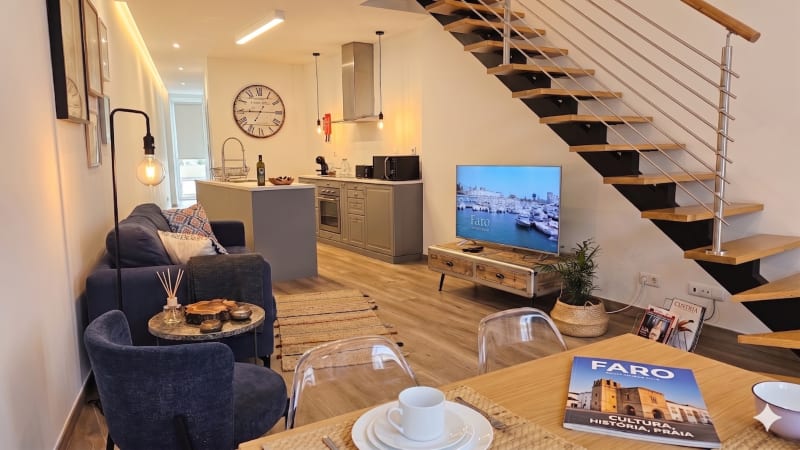
Our Casa da Mouraria is perfectly located for travelers arriving via Faro Airport. Situated in the heart of Faro's historic center, it offers immediate walking access to the central train station, the marina ferries, and exceptional dining, making it the ultimate hub for car-free exploration.
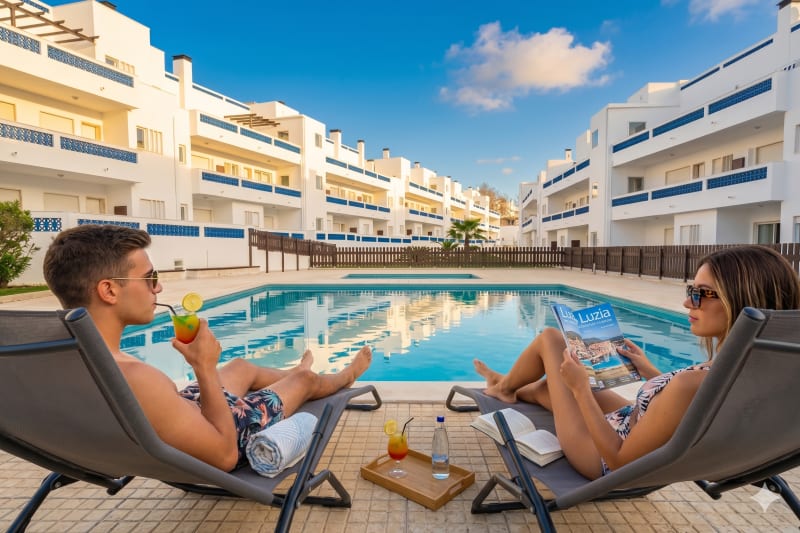
If you prefer to wake up in a quiet coastal village, the Santos Apartment offers a peaceful, beach-oriented experience in Santa Luzia. With easy access to bicycle rentals, a direct ferry to Praia da Terra Estreita, and quick regional train access from nearby Tavira, it is the perfect sanctuary for a sustainable Portuguese getaway.