Non-Touristy Algarve — The Quiet Side of Portugal (2026 Guide)
When most travelers think of the Algarve, they often imagine large resorts, overcrowded beaches, and noisy nightlife strips. However, there is "another Algarve." A much quieter, deeply authentic, and preserved side where time seems to slow down.
This non-touristy Algarve is defined by traditional fishing villages, deserted barrier islands, protected nature reserves, and silent sunsets. It is precisely this side of Portugal that travelers from Northern Europe — especially Germany, Scandinavia, and the Netherlands — are now seeking to escape mass tourism and embrace true slow travel.
In this guide, we take you to discover the Eastern Algarve (Sotavento), the region that has best preserved the Portuguese soul and where luxury is found in simplicity and connection with nature.
🌦️ The Climate Rhythm and the Balance of the Seasons
For travelers seeking the non-touristy Algarve, the Sotavento climate acts as an invitation to physical and mental disconnection. Thanks to the sheltered ecosystem of the Ria Formosa, temperature fluctuations are gentle, creating the ideal conditions for outdoor living:
🍂 The Golden Autumn (September to November): Considered by many to be the best time. The sea water reaches the warmest temperatures of the year, days maintain a pleasant average of 23°C (73°F), and sunlight takes on a soft, mystical tone.
🌿 The Awakening Spring (March to May): Nature trails fill with wildflowers, days begin to lengthen, and the sea breeze refreshes morning walks before relaxed afternoons on the beach.
Why Travelers Seek the Non-Touristy Algarve
In recent years, many international travelers have deliberately begun to avoid overly touristy destinations. Instead of holidays centered around giant resorts and streets packed with bars, they seek more human, quiet, and emotionally authentic experiences.
This is exactly why the Eastern Algarve has become one of the most sought-after secrets among experienced travelers. Here, luxury is not found in beach clubs or gigantic hotels — it is in being able to hear the sea, dining without rush at a small local terrace, and walking on a practically empty beach at sunset.
Unlike busy areas like Albufeira or Praia da Rocha, the Sotavento offers:
less traffic
less night noise
wider, more natural beaches
more traditional gastronomy
a safe and relaxed environment
genuine contact with Portuguese culture
For many visitors from Northern Europe, this represents the true concept of premium holidays in 2026.
The Secret of Eastern Algarve: Why It Remains Different
The main reason why the Eastern Algarve has remained off the mass tourism radar for so long is its unique geography. While the Central Algarve is marked by cliffs and bays accessible by road, the Sotavento is protected by the Ria Formosa Natural Park. This wetland of international importance prevents the construction of large hotels right on the waterfront.
To reach the best beaches, it is necessary to cross the lagoon by boat or walk along nature trails. This "natural filter" keeps the crowds away and preserves biodiversity. Here, instead of skyscrapers, you will find artisanal salt pans, flamingos, and small fishing boats. It is the ideal destination for those who value silence and cultural authenticity over generic tourist infrastructure.
Furthermore, the very speed of life is different. Small cafés remain full of locals, municipal markets operate daily, and many traditions linked to fishing and gastronomy have remained practically unchanged for decades.
🏛️ Signs of Authenticity: The Legacy of Artisanal Salt
As you walk around Tavira or Santa Luzia, you will notice the geometric water mirrors of the salt pans. This is not just a beautiful landscape; it is a sign of economic authenticity. The harvesting of Flor de Sal continues to be done by hand by local salt workers using Roman techniques. This respect for tradition is what keeps the Sotavento protected from artificial transformations.
What “Slow Travel” Actually Feels Like in Eastern Algarve
The concept of slow travel has become one of the biggest travel trends in Europe — but few places represent it as well as the Eastern Algarve.
Here, days organize themselves naturally:
☕ breakfast without rush at a terrace café
🚶 walks along the Ria Formosa
📖 reading in the shade of the dunes
🦩 spotting flamingos in the salt pans
🍷 long dinners at sunset
🌙 quiet nights without traffic or noise
In Santa Luzia and Tavira, no one seems to be in a hurry. And this completely transforms the visitor's experience.
It is precisely this environment that makes many tourists initially book only 3 nights... and end up wishing to stay 5, 7, or even more days.
Santa Luzia — One of Algarve’s Best Hidden Villages
Santa Luzia remains one of the least touristy and most charming places in the Algarve. Located just a few minutes from Tavira, the village keeps its fishing identity intact. Unlike seasonal holiday towns, life here does not revolve around nightclubs, but rather the cycle of the tide and octopus fishing.
Walking along the waterfront of Santa Luzia is watching local life happen: fishermen repairing nets, locals chatting in cafés, and the calm rhythm of a village that refuses to change to please fast tourism. For visitors, this translates into an immersive experience in Portuguese culture, with access to some of the best seafood restaurants in the country.
The absence of large hotels and excessive tourism helps preserve the genuine atmosphere of the village even during the summer.
🍽️ Gastronomic Culture: The Octopus Ritual
In Santa Luzia, sitting at the table is an act of respect for the sea. The octopus served in the small family restaurants along the waterfront is caught sustainably using traditional clay pots (alcatruzes). Savoring a Polvo à Lagareiro drizzled with premium local olive oil is to understand the intimate connection this community maintains with the Atlantic.
Tavira — The Elegant Alternative to Mass Tourism
While many European coastal cities have lost their identity due to rapid tourism, Tavira has managed to preserve a rare balance between authenticity and sophistication.
The city is often considered one of the most beautiful in the Algarve thanks to its:
preserved traditional architecture
Roman bridge over the Gilão River
dozens of historic churches
small tree-lined squares
independent cafés and local restaurants
At the end of the afternoon, Tavira takes on an almost cinematic atmosphere. The lights reflect in the river, church bells echo softly, and visitors stroll without rush through the cobbled streets.
For couples and travelers looking for an elegant yet relaxed Portuguese experience, Tavira has become a true refuge from mass tourism.
🌿 Local Behavior: Respect for the Silence of the Plazas
As you stroll through Tavira at dusk, you will notice that people dine outdoors without any rush. There is no loud music coming from the establishments. Local behavior values the natural sound of the river water and the soft murmur of conversations. It is a sophisticated, safe, and deeply restful environment for those looking to escape urban noise.
Hidden Beaches: Finding Solitude in Nature
In the non-touristy Algarve, beaches are extensive and wild. In the Sotavento, you won't find crowds fighting for a spot to put their umbrella.
Praia da Terra Estreita: ** A local secret accessible only by boat from Santa Luzia. Even in the middle of summer, it is possible to find hundreds of meters of sand just for yourself.
Praia da Fábrica (Cacela Velha): ** Often considered one of the most beautiful beaches in Portugal, Praia da Fábrica offers incredibly calm waters, pristine white sand, and a rare sense of isolation in Southern Europe. Access is by small boat from the historic village of Cacela Velha, making the entire experience even more special and exclusive.
Ilha Deserta (Deserted Island): ** As the name suggests, it is an uninhabited barrier island in Faro, offering miles of untouched coastline where the only sound is the waves.
These beaches attract travelers seeking the purity of the elements and a refuge from modern bustle.
Best Time to Visit the Quiet, Non-Touristy Algarve
Although the Algarve is famous for summer, many experienced travelers consider the best months to discover the most authentic side of the region to be:
🍂 September and October — warm sea, fewer tourists in the region, and a golden light perfect for travel photography.
🌿 March to May — lush nature, very mild temperatures, and natural trails ideal for walking and cycling.
☀️ Algarve Winter — mild weather with constant sunshine, quiet cafés with terraces, and an extremely relaxed rhythm of life.
During these periods:
restaurants become more local
beaches are almost empty
parking is easy
Ria Formosa trails are more enjoyable
the general atmosphere becomes even more authentic
It is exactly at these times that the concept of the “quiet Algarve” gains all its strength and life.
🌿 What Travelers Quietly Fall in Love With
One of the most fascinating things about the Eastern Algarve is how differently people experience it. Unlike destinations built around attractions and packed itineraries, the Sotavento creates emotional memories through small, almost intimate moments: morning silence, empty beaches, conversations with locals, the sound of fishing boats at dusk, or long dinners that stretch into the night. Many travelers arrive expecting “just another beach holiday” and leave feeling unexpectedly connected to the slower rhythm of life here.
“We came for 3 nights and extended to a full week.”
“Our original plan was to stay only a long weekend in Santa Luzia before moving west along the Algarve. But after the second day, we cancelled the rest of the trip. Every morning started with coffee by the lagoon and every evening ended watching the sunset near the fishing boats. It felt impossible to rush here.”
— Anna & Markus, Hamburg
“The silence felt luxurious.”
“What surprised us most was not the beaches — although they were beautiful — but the atmosphere. No loud bars. No traffic. No pressure to do anything. Just space, light, and calm. We spent hours simply walking between Tavira and Santa Luzia.”
— Sophie, Utrecht
“Our children were happier here than anywhere else.”
“Usually family holidays are exhausting. Here, the calm water, short ferry rides and pedestrian villages made everything easy. The kids played safely while we actually relaxed for the first time in years.”
— Claire & Daniel, Dublin
📸 Photography Moment: The Minimalism of the Salt Marshes
When walking along the elevated boardwalks of the Ria Formosa during sunrise, focus your lens on the small saline shrubs that emerge from the fog. The complete calm of the water creates a perfect mirror effect, capturing a minimalist and poetic image that conveys the true luxury of silence.
Why International Travelers are Choosing the Quiet Side
Many visitors from Germany, the Netherlands, and Scandinavia are exchanging traditional holiday packages for the Eastern Algarve for several reasons:
Low Tourist Density: ** More personal space on the beaches, less traffic, and a total absence of noise pollution.
Authentic Culture: ** The real opportunity to live like a local, buy fresh ingredients in municipal markets, and eat at traditional family-run tascas.
Slow Travel: ** A geographical and social environment that naturally invites reading, walking, cycling, and contemplation.
Protected Nature: ** Direct access to the Ria Formosa Natural Park, with its unique wildlife, flamingos, and preserved wetlands.
Excellent Climate: ** Over 300 days of sunshine per year, making the region the ideal destination for visits and walks outside the high season.
Practical Tips for Planning a Non-Touristy Algarve Stay
To truly enjoy the most authentic Algarve, it is worth adapting the rhythm of your trip slightly:
📍 Choose minimum stays of 3 nights (Ideally 5 to 7 nights): ** The Sotavento was not designed for fast-paced tourism. The more time you spend in a single place, the more easily you will understand the true charm and micro-rhythms of the region.
🚶 Avoid overly aggressive itineraries: ** The best experience here happens between slow walks, long coffees by the lagoon, and spontaneous discoveries through historic alleys.
🚲 Use a bicycle or regional train: ** Many of the best experiences and journeys between Faro, Olhão, Tavira, and Santa Luzia can be made in a totally ecological and stress-free way through the Ecovia do Litoral or the Algarve railway line.
🍽️ Dine later, like the locals: ** Towns and cities take on a sophisticated and fresh life at the end of the day, especially along the waterfronts, plazas, and traditional terraces.
📷 Enjoy the golden hour light: ** The Eastern Algarve possesses some of the best natural light conditions in Europe for landscape and architectural photography.
Frequently Asked Questions (FAQ)
Which part of Algarve is less touristy?
The Eastern Algarve (Sotavento), especially the preserved areas between Faro and the Spanish border — such as Olhão, the village of Santa Luzia, the historic city of Tavira, and Cacela Velha —, is the most authentic, cultural, and less crowded region of Southern Portugal.
Is Tavira touristy?
Compared to the resorts of the Central Algarve, Tavira is exceptionally quiet and dignified. While it attracts international visitors, its audience consists of couples, photographers, and families seeking culture, heritage, and silence, with the city maintaining a lively and purely Portuguese atmosphere all year round.
Where can I find quiet beaches in Algarve?
Praia da Terra Estreita (accessible by boat from Santa Luzia) and Praia da Fábrica in Cacela Velha are two of the best options for those seeking quiet beaches, untouched dunes, and a much calmer atmosphere. Both offer extensive white sands, crystal-clear waters, and a strong sense of natural isolation even during the peak of summer.
Is Eastern Algarve good for a 5 to 7-night stay?
Yes. The Sotavento Algarvio is the perfect setting for longer stays because it combines pristine beaches, Roman and Moorish historical heritage, high coastal gastronomy, and a slow pace of life (slow travel) that requires time to be fully absorbed, without the need to travel great distances daily.
☀️ THE PERFECT MORNING IN THE EASTERN ALGARVE
The perfect Algarve morning is surprisingly simple. Wake up early. Walk to the local market. Drink an espresso surrounded by locals. Buy fresh bread, tomatoes, olives and seafood. Then slowly return to your apartment through quiet Mediterranean streets while the sun rises over the city. These small moments often become travelers’ strongest memories of Portugal.
Recommended Stays for Your Retreat
Discover the serene and sophisticated side of Portugal with Algarve Stay Homes. We offer accommodations that are true private sanctuaries for those seeking authenticity, silence, and premium comfort:
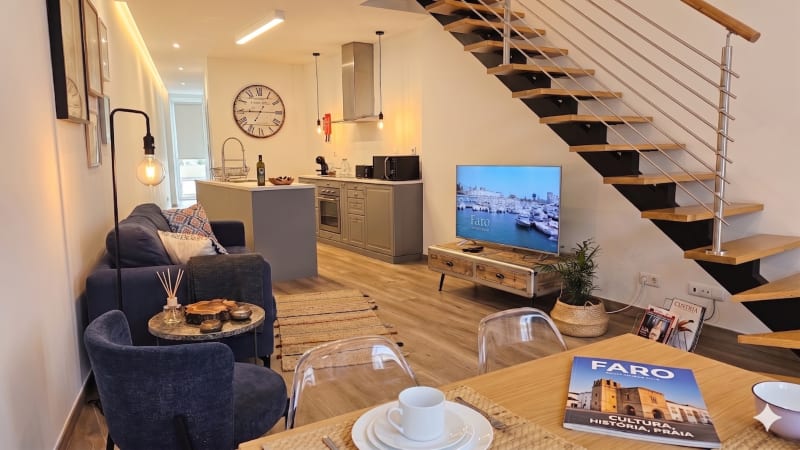
• If you wish to immerse yourself in the secular history and genuine local life of Faro, **Casa da Mouraria** is situated in the heart of the walled historic center. It is the perfect base for exploring the deserted and uninhabited islands of the Ria Formosa, walking to traditional restaurants, and living the authentic rhythm of the Algarve capital from a fully private interior patio.
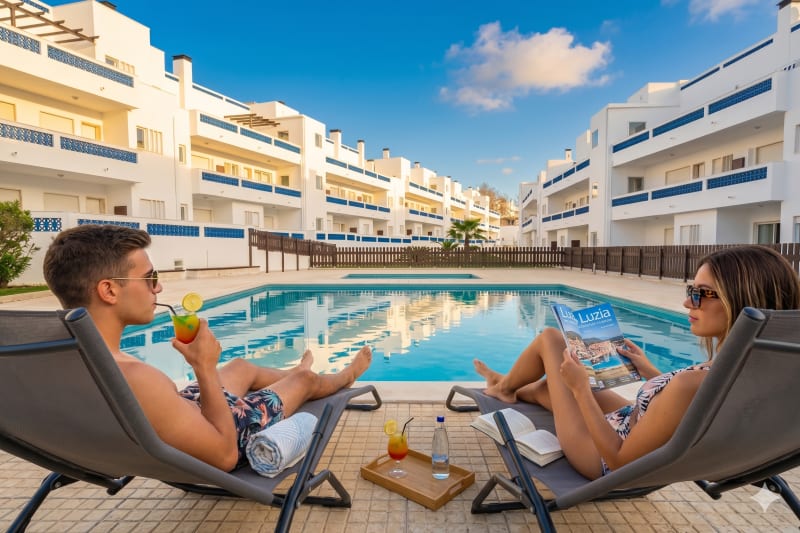
• For those seeking the absolute tranquility of a coastal village and the true spirit of slow living, our **Santos Apartment** in Santa Luzia offers a modern design, a refreshing pool, and direct access to the calmest and most exclusive beaches in the region. Located in a secure development with 24-hour security and a private closed garage, it is the ideal retreat for extended, restorative holidays of 3, 5, or 7 nights in the octopus capital.
Here, you won't just be visiting the Algarve of the tourist brochures. You will be experiencing the most authentic, silent, and memorable side of Southern Europe. Book your stay directly with us today.
Where to stay
Our Algarve Homes
Stay close to everything you explored in this guide.